
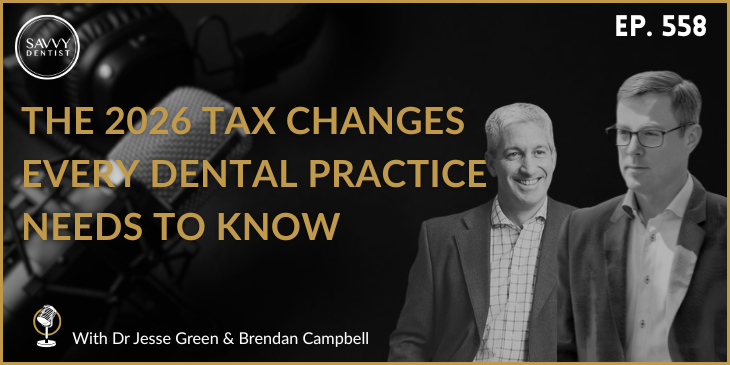
Are the 2026 tax changes about to undo years of work in your practice? Dr Jesse Green and Brendan Campbell go through what the changes actually mean for a practice owner, and the answer is calmer than the headlines suggest.
You will find out which assets are grandfathered and need no action at all, how far away the real deadlines sit, where changing the way your practice is owned could get more money into super, and which questions to put to your accountant about your trust and your bucket company before anything shifts. If you are a dental practice owner with a trust, an investment property or a super balance you are working to grow, you won’t want to miss this episode.
In This Episode:
- 02:39 Division 296 and the $3 million super balance threshold, and why super is still one of the best places to hold money
- 06:21 The 50% CGT discount ends 1 July 2027 and cost base indexation returns, so gains arising before that date keep the discount
- 13:34 Negative gearing limited to new residential builds from 1 July 2027, with properties acquired before budget night exempt until you sell
- 31:02 The 30% minimum tax on discretionary trust income, and what it changes for bucket companies
- 41:11 The restructure that can move money into super, create a deduction on the borrowing, and lift your cost base
Notes On This Episode:
- The capital gains tax and negative gearing reforms discussed in this episode are now law, taking effect from 1 July 2027
- Division 296 applies an extra 15% to super earnings above $3 million, with a further 10% above $10 million. Both thresholds are indexed and may rise over time
- The 30% minimum tax on discretionary trusts, the loss carry-back measure, and the instant asset write-off changes were proposed as part of the 2026-27 Budget. Confirm current status with your accountant before acting
Resources and Links:
- Learn more about Prosperity Advisors
- How Does Your Dental Practice Compare Against the Top Performers?
- Stay Up to Date by Following Dr Jesse Green on Instagram
- Connect with Dr Jesse Green on LinkedIn
- If you’re a Dental Practice Owner looking to scale your practice, learn more about our Practice Max Program
This episode was recorded on 21 July 2026. The information and commentary shared is general advice only. It does not take into account any individual’s objectives, financial situation or needs, and it is not a substitute for advice about a specific practice or structure. Listeners should obtain advice from their own accountant, tax agent or licensed adviser before acting on anything discussed.